

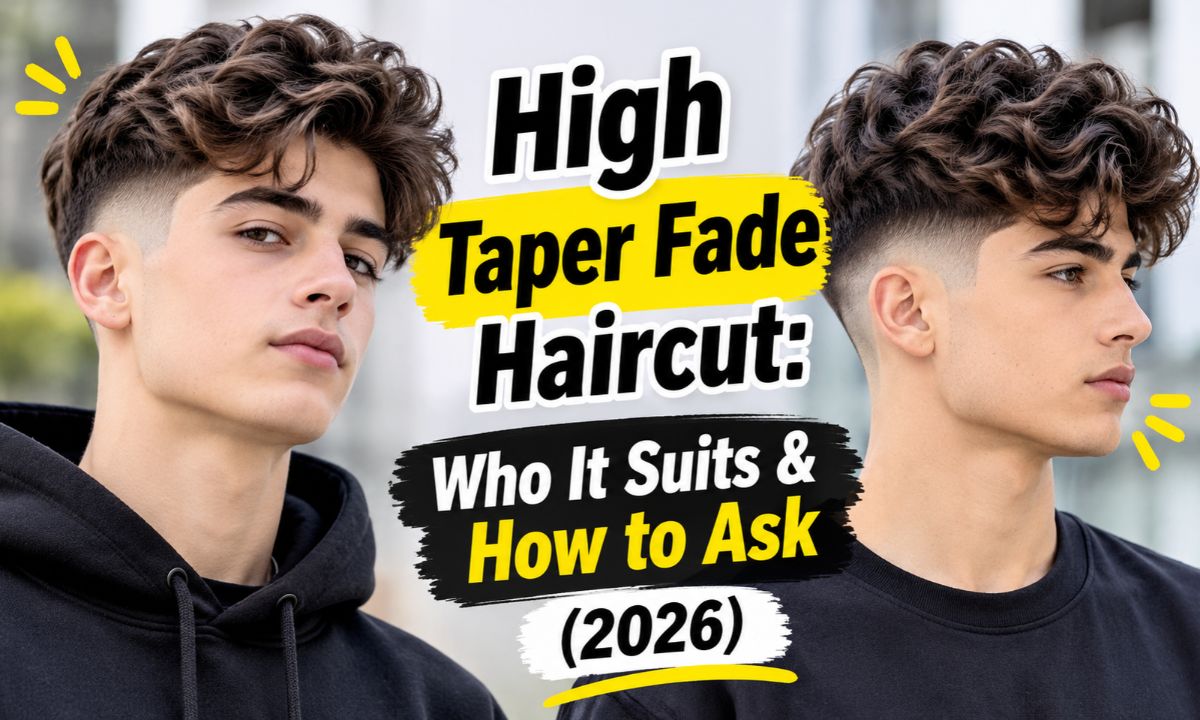
A High Taper Fade Haircut is clean, sharp, and easy to love. The sides start short near the top. They blend down to the skin or a very short length. The top stays longer, so you can style it your way. It looks neat at work. It also looks bold on the weekend.
Not every cut suits every head. Face shape, hair type, and daily routine all matter. This style works well on many men. It works best on straight, wavy, and curly hair. It also gives a strong shape to round and oval faces.
In this guide, you will see who it suits. You will also learn how to ask your barber for it. Use the right words, and you get the right cut. Bring a photo too. Read on, and walk into the chair with confidence in 2026.
🚀 What Is a High Taper Fade?
A high taper fade is a haircut where the hair gets shorter in steps. The shortening starts high on the sides, near the temple line. The longest hair sits on top. The shortest hair sits around the ears, sideburns, and neckline.
The word “taper” matters. A taper shortens the hair toward the edges. A fade can go all the way down to bare skin. Most high taper fades sit between the two. They give a clear contrast, but they stay softer than a high skin fade.
Cut anatomy: fade zone, blend, and retained length
Every high taper fade has three parts.
- Fade zone: the area where the hair gets progressively shorter. In a high taper it begins near the temples.
- Blend: the smooth gradient between short and long hair. A good blend has no lines, steps, or patches.
- Retained length: the hair left on top and, sometimes, the weight kept around the crown.
Terminology: why the name varies between barbers
Barbers do not all use the same words. One person’s “high taper” is another’s “high fade with a taper finish.” Some shops use clipper guard numbers. Others describe the look.
That is why a photo and a clear description matter more than the name alone.
📌 How the Fade Zone, Blend, and Kept Length Work
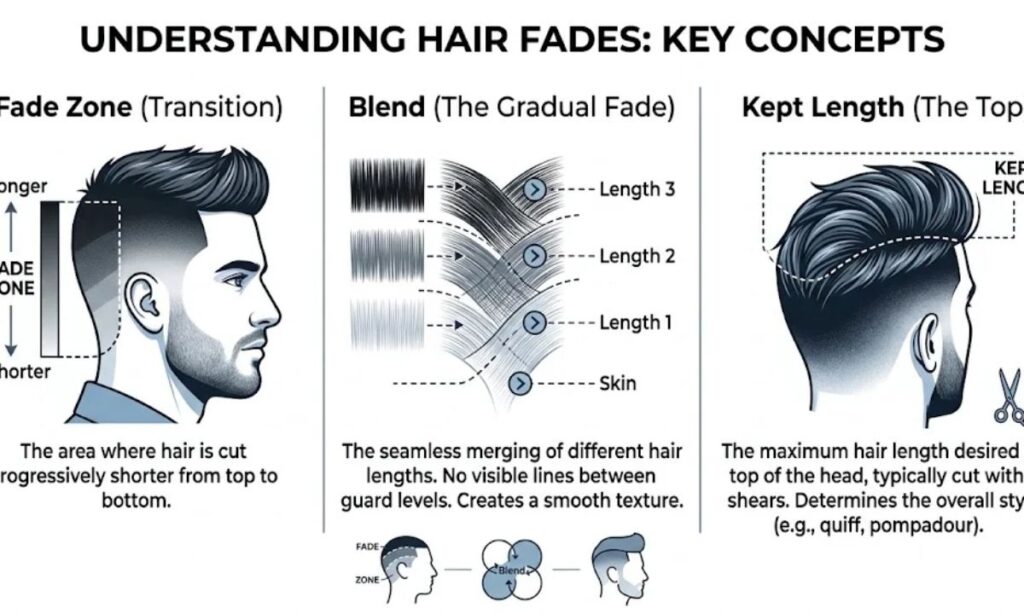
Think of the head as three zones. The top holds your length. The middle is the blend. The bottom is the shortest section.
Barbers build the gradient with clippers and different guard sizes. As a rough guide, a #1 guard leaves about 3 mm, a #2 about 6 mm, a #3 about 10 mm, and a #4 about 13 mm. Guard lengths vary a little by brand, so ask your barber what they use.
In a high taper, the blend starts near the temple. Then it works downward in small steps. The barber finishes with a lighter pass or a detail trimmer to clean the edges.
Two things make or break the result. One is how smooth the blend looks. The other is how much length stays on top. If the top is too short, the cut loses its shape. If the blend is patchy, the whole cut looks rushed.
✅ High Taper Fade vs High Fade, Low Taper, and Mid Taper
The main difference is where the shortening starts and how short it gets.
| Cut | Where it starts | Contrast | Best for |
| High taper fade | Near the temples | Strong but soft | A clean, modern look with some edge |
| High fade | Same height, often to skin | Very strong | A bold, sharp look |
| Mid taper | Around the ear level | Medium | A balance between neat and relaxed |
| Low taper | Low around the ears and neckline | Subtle | A conservative, easy grow-out |
If you are unsure, start lower. A barber can always take a cut higher next time, but you cannot put the hair back.
💡 What Are the Main Benefits of a High Taper Fade?
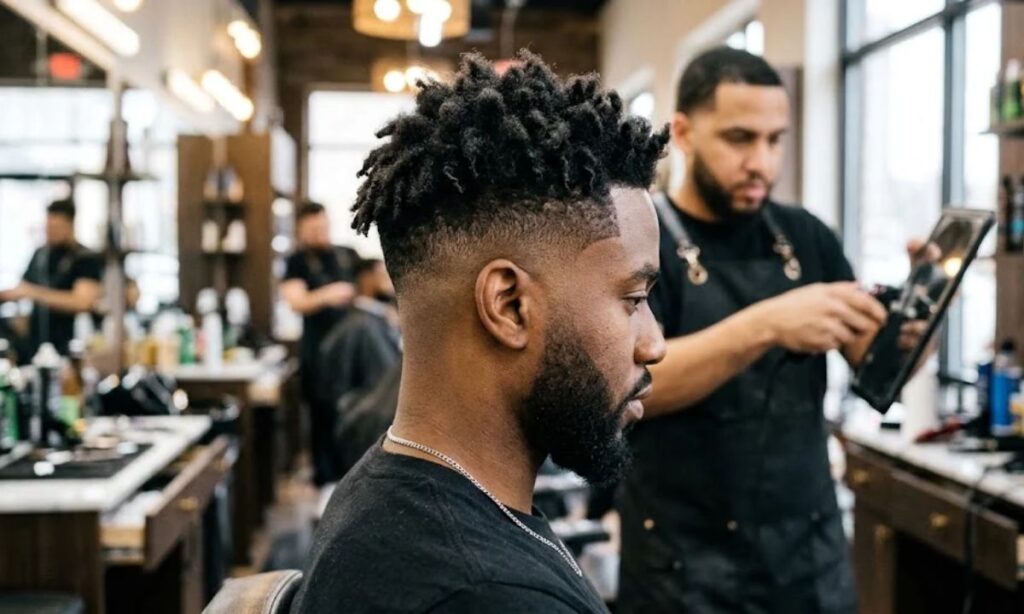
People choose this cut for good reasons.
- Clean shape. The tight sides make the top stand out.
- Works with many styles. It pairs with a quiff, crop, curls, twists, or a buzz cut.
- Easy to style. The shape does half the work for you.
- Fresh look. It looks neat in a few days and stays tidy for a couple of weeks.
- Flexible length. You can keep it soft or push it sharper next time.
- Good with beards. The taper can blend straight into a beard.
❓ What Is the Difference Between a Taper and a Fade?
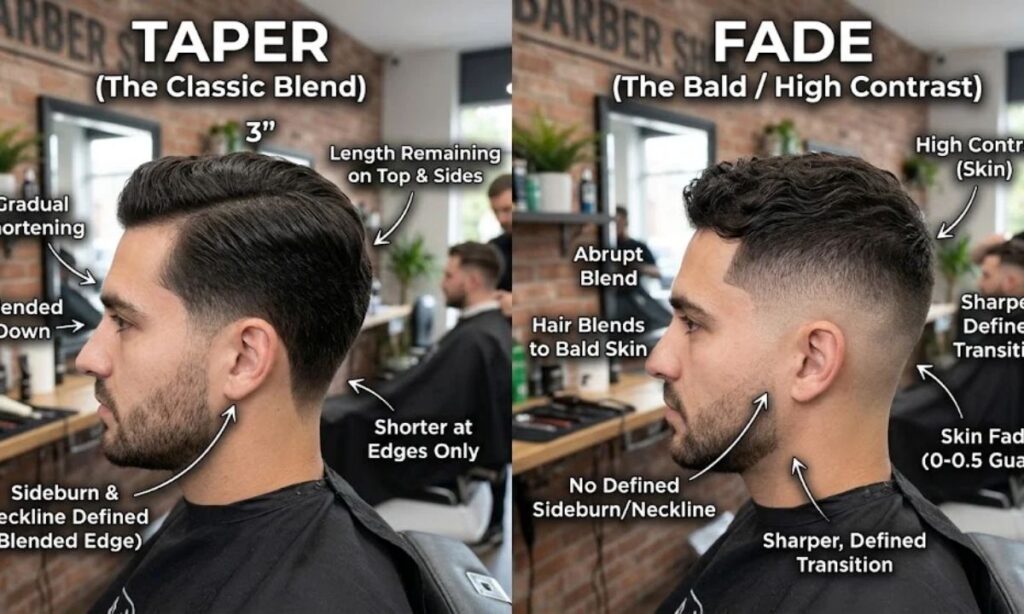
A taper shortens the hair gradually at the sideburns and neckline, and the hair usually does not go down to skin. A fade moves the hair down much shorter, often to bare skin, over a larger area.
In practice, the two overlap. A “taper fade” is a taper with a fade-style blend. A high taper fade simply raises that blend higher on the head.
🎯 Who Does a High Taper Fade Suit?
Most people can wear it. The details change by hair type, head shape, and how much time you want to spend on it.
Hair texture, density, and growth pattern
- Thick, straight hair: holds the shape well. The contrast looks strong.
- Fine or thin hair: works if you keep a little length on top. Very short tops can look flat.
- Wavy hair: the taper controls the sides while the top keeps natural movement.
- Curly and coily hair: gives definition to the top and neatness at the sides.
- Cowlicks and strong crowns: tell your barber. They may leave more length in those areas.
Face, head shape, hairline, and scalp visibility
A high taper adds height and draws the eye upward. That can balance a rounder face and flatter a square jaw.
If you have a narrow face, ask for a bit more width on the top. If you have a receding hairline, a high taper can look good, but the skin around the temples will show more. A barber can soften the line.
Check your scalp too. Scars, moles, or a flat spot become more visible with short sides.
Lifestyle and upkeep tolerance
If you want a tidy look and don’t mind a trim every few weeks, this cut fits. If you prefer a haircut you can ignore for two months, a mid or low taper is easier.
💈 Which High Taper Fade Style Fits Your Hair?
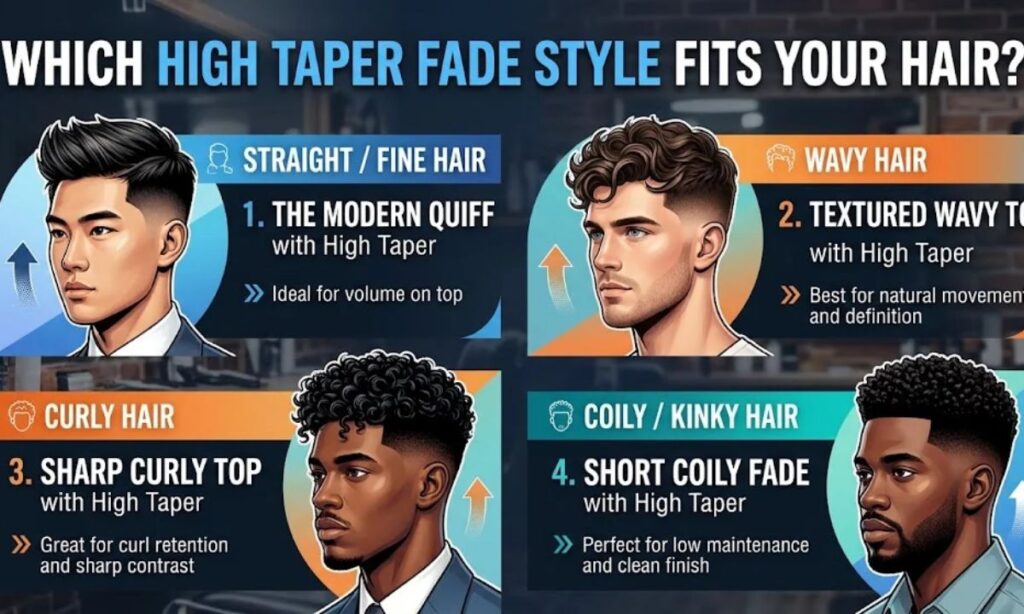
The fade is only the base. The top decides the final look. Here is how to match the style to your hair.
High taper fade styles for curly and coily hair
A high taper fade works especially well on curly and coily hair because it keeps the sides and nape tightly faded while leaving the top long enough to show off your natural texture. For coily hair, a high taper with a twisted or finger-coiled top gives a clean, defined look, since the contrast between the sharp fade and the tight coils makes the curl pattern stand out.
On looser curls, you can pair the fade with a longer, bouncy top and add a curl cream or sea salt spray to boost definition without frizz. A high taper with a line-up (shape-up) at the temples and forehead adds a crisp edge that frames the face, while a curly high taper with a sponge twist or comb coils suits shorter lengths on the crown.
To keep any of these styles looking fresh, moisturize the top daily, wrap or cover your hair at night, and book a barber visit every two to three weeks so the fade stays sharp.
Rounded afro or defined curly top
Keep the curls longer on top and shape them into a soft round. The taper keeps the sides sharp so the curls look deliberate, not messy.
Use a curl cream on damp hair. Let it air dry or use a diffuser. Pick the top with your fingers to add volume.
Twists, locs, or braids with a high taper
A high taper looks great with twists, locs, or braids. The short sides make the pattern on top easier to see.
Ask the barber to cut the taper before you retwist or re-braid. That way the sections stay clean.
High taper fade styles for straight and wavy hair
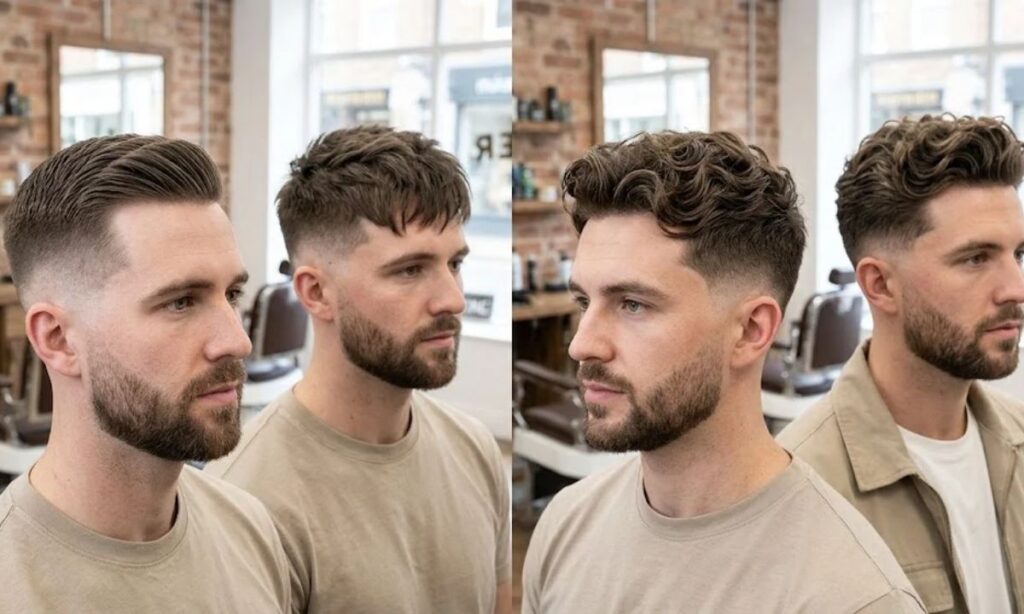
A high taper fade keeps the sides and back tightly faded up high, near the temple and ear line, while leaving noticeable length on top. It gives a sharp, clean look that works well for both straight and wavy hair.
For straight hair:
Try a textured crop or a sleek side part on top. Straight hair holds clean lines well, so a classic comb-over with a hard part, or a short fringe with a matte clay, looks sharp and polished. Keep the top 2 to 4 inches for a defined shape.
For wavy hair:
Keep more length on top, around 3 to 5 inches, and let the natural waves show with a messy quiff or a textured flow. A light sea salt spray or curl cream adds definition without weighing the waves down, and the high fade contrast makes the movement on top stand out.
Whichever style you choose, ask your barber for a blended taper so the transition from skin to length looks smooth, and book a touch-up every 2 to 3 weeks to keep the fade crisp.
Textured crop or forward fringe
A short, textured top with a light fringe looks modern and low effort. Use a matte clay. Push the hair forward and rough it up with your fingers.
This works well for fine hair, because the fringe adds visual thickness.
Side part, quiff, or pompadour
These need more length on top, usually 4 to 8 cm. The high taper makes the volume stand out.
Blow-dry the hair up and back. Use a medium-hold pomade or paste. A hard part adds an extra sharp, classic touch.
Short high taper fade options with less daily styling
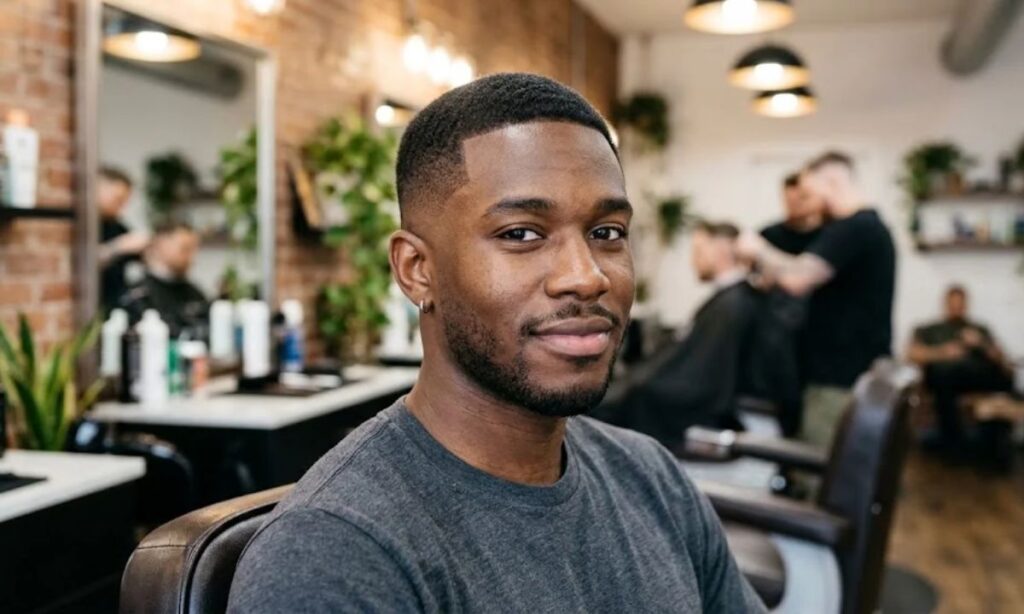
A short high taper fade is one of the easiest cuts to maintain, and a few variations keep daily styling close to zero. The classic short crop (about 1 inch on top, brushed forward) needs only a quick comb and no product.
The buzz cut with a high taper (guard #2 or #3 on top) takes no styling at all, just regular trims every 2 to 3 weeks to keep the fade sharp. The textured crop (slightly longer on top, cut with choppy layers) only needs a pea-sized amount of matte clay or paste worked through damp hair.
If your hair is wavy or curly, a short natural top with a high taper lets your texture fall into place, so you only need to apply a light leave-in cream and let it air dry.
Buzz cut or crew cut
A buzz cut on top with a high taper on the sides is the easiest version. A crew cut keeps slightly more length at the front. Both need almost no styling.
Short textured top
Keep about 2 to 4 cm on top and cut it with scissors for movement. A dab of paste is enough.
Beard and neckline pairings
Temple-to-beard blend
The taper can flow from the temple down into the beard. Ask the barber to blend the sideburns into the beard so there is no sudden jump. This looks clean and intentional.
Tapered nape versus defined neckline
A tapered nape fades out gradually and grows out more naturally. A defined neckline is squared or rounded with a sharp edge. It looks crisp on day one but shows regrowth faster.
| Neckline | Look | Grow-out |
| Tapered | Soft, natural | Easy |
| Blocked or squared | Sharp, bold | Gets untidy sooner |
| Rounded | Balanced | Medium |
🗣️ How Do You Ask a Barber for a High Taper Fade?
Be specific. A vague request leaves the decisions to the barber.
Seven haircut specifications to agree on
- Fade height: where the shortening starts (for example, “just above the temple”).
- Shortest length: a guard number or “to skin.”
- Top length: in centimeters or by how far you want it to reach.
- Blend softness: soft and natural, or sharp and clear.
- Neckline: tapered, rounded, or squared.
- Sideburns and temples: natural or edged.
- Finish: matte, natural, or polished with product.
Reference-photo checklist
- Bring two or three photos.
- Include the front, side, and back if you can.
- Pick photos with hair like yours in texture and density.
- Circle or note what you like most (the blend, the top, or the neckline).
- Mention anything you do not want.
Copyable barber script
“I’d like a high taper fade. Start the blend just above the temples and keep it soft, not skin. Leave about [X cm] on top with some texture. Taper the neckline instead of squaring it. Here are a few photos for reference.”
For a sharper cut, change “not skin” to “down to a skin fade at the bottom.”
Your pre-appointment checklist
- Choose your photos.
- Decide how sharp you want it.
- Check how you will style it at home.
- Tell the barber about your work or dress code.
- Mention cowlicks, thinning, or scars.
- Ask the barber to show you the sides in a mirror before finishing.
🧴 How Do You Maintain and Style a High Taper Fade?
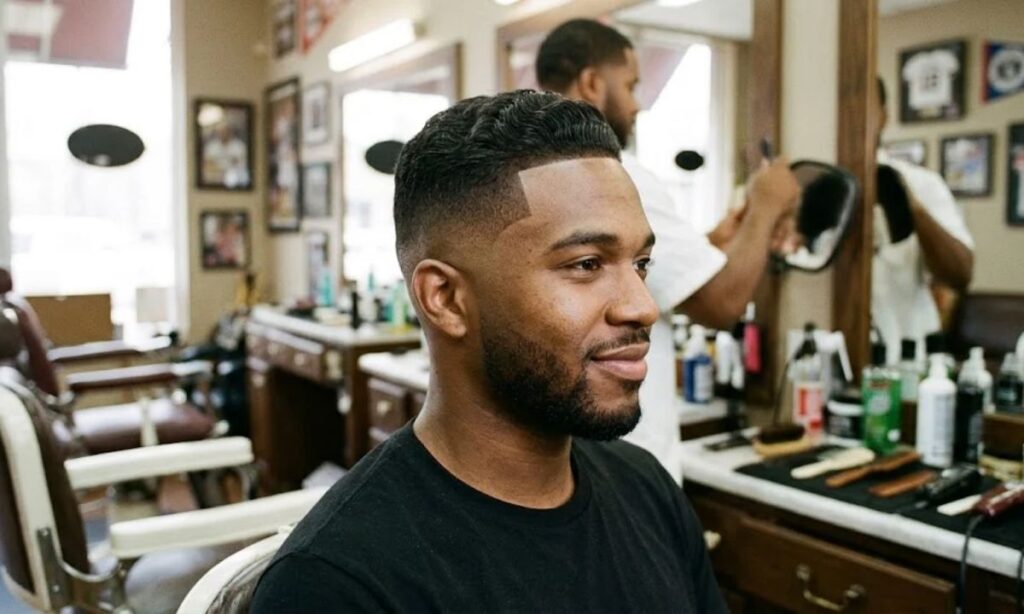
Upkeep is simple, but it is regular.
Refresh schedule and grow-out
Most people refresh a high taper every two to three weeks. Beyond four weeks, the fade softens and loses shape. A skin-level fade looks older sooner than a classic taper.
Daily styling by hair texture
| Hair type | Product | How to use it |
| Straight | Matte clay or paste | Apply to dry hair, shape with fingers |
| Wavy | Sea salt spray, light cream | Scrunch on damp hair |
| Curly | Curl cream, gel | Apply to wet hair, diffuse or air dry |
| Coily | Leave-in conditioner, oil, gel | Moisturize, then define |
Safe between-visit cleanup
You can tidy a few things at home.
- Use a small trimmer only on the loose neckline hairs.
- Do not try to redo the blend yourself.
- Wash and moisturize the scalp regularly.
- Leave the sideburn and temple lines to the barber.
🌱 Growing It Out Smoothly
Growing out a high taper can look awkward at first. Here is how to make it easier.
- Ask the barber for a longer, softer blend at your next visit.
- Get a small trim of the neckline and sides every four to six weeks.
- Use product to keep the top neat while the sides catch up.
- Be patient. The in-between stage usually lasts a few weeks.
⚠️ Who Should Think Twice
A high taper fade is not right for everyone.
- Very sensitive skin or frequent razor bumps. Skin-level sides can irritate.
- A strict professional dress code. Some workplaces prefer a softer look.
- Scars or birthmarks on the scalp. Short hair will show them.
- Little time for upkeep. The cut looks best when refreshed often.
- Very thin hair. Keep more length on top, or choose a mid taper.
🪒 Razor Bumps, Irritation, and Clean Tools
Razor bumps happen when short hairs curl back into the skin. They are more common on curly or coily hair and on freshly shaved areas.
To lower your risk:
- Ask for a taper with a small amount of length, not a bald finish.
- Skip dry shaving or very close blades around the neckline.
- Cleanse the area gently after the cut.
- Do not pick at bumps.
- Use a soothing, alcohol-free product.
A good barber also keeps tools clean. Look for fresh capes, sanitized clippers and blades, and a clean station. Do not be shy about asking. Persistent redness, pus, or pain is a reason to see a doctor.
🔁 Best Alternatives to a High Taper Fade
If this cut feels too bold, these options give a similar feel.
- Mid taper fade: a balanced middle ground.
- Low taper: subtle and easy to grow out.
- Scissor-cut taper: no clippers, softer finish.
- Classic short back and sides: a traditional, easy upkeep style.
We cover them in more detail below.
⛔ What Are the Drawbacks and Safety Considerations?
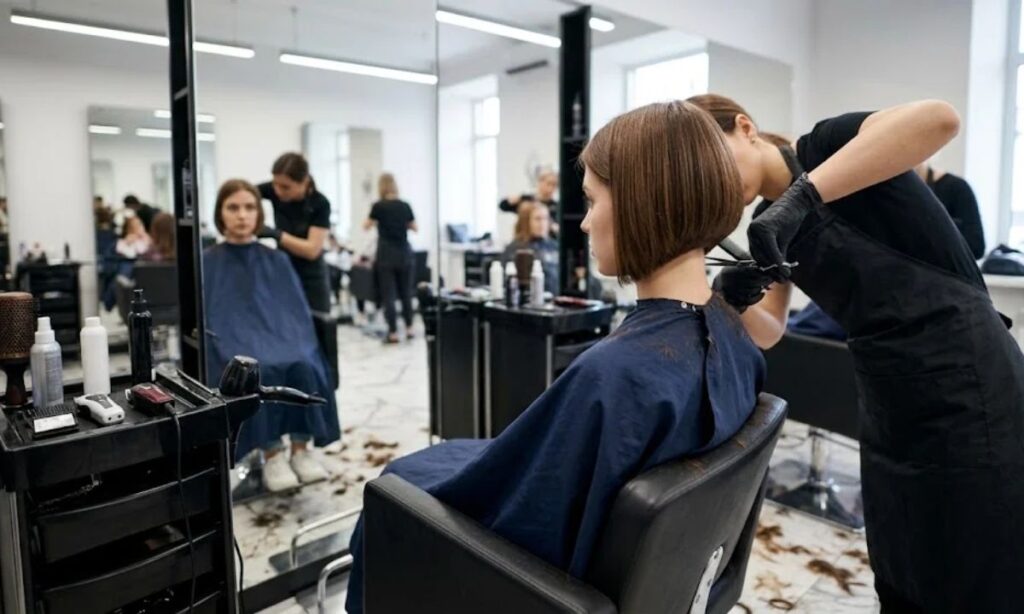
The cut is popular, but it has trade-offs.
Practical drawbacks and edge cases
- Regular trims needed. The look fades quickly.
- Hard to fix if too high. You have to wait for it to grow.
- Less forgiving on uneven heads. Short sides show bumps and flat spots.
- Sun exposure. The exposed scalp can burn, so use sunscreen.
- Can look sharper than expected. A vague request may produce a bolder cut than you wanted.
Irritation, razor bumps, and barber-tool hygiene
Most problems come from irritation or unclean tools. Choose a barber who sanitizes equipment between clients. Keep the skin clean afterward. If a rash or bumps keep returning, speak to a healthcare professional.
🔄 What Are the Best Alternatives to a High Taper Fade?
| Alternative | Why choose it | Upkeep |
| Mid taper | Less contrast, still neat | Every 3 to 4 weeks |
| Low taper | Subtle, workplace-friendly | Every 4 to 5 weeks |
| Low fade | Clean with soft edges | Every 3 weeks |
| Scissor taper | Natural, gentle on skin | Every 4 to 6 weeks |
| Short back and sides | Classic and simple | Every 4 to 6 weeks |
If you cannot decide, begin with a mid taper. Raise the height at your next appointment if you want more contrast.
📜 Origins of the High Taper Fade
Tapering is an old barbering technique. Barbers have long shaped short hair around the ears and neck using scissors and clippers, including the classic short back and sides.
The modern fade grew from that tradition. It became closely tied to Black barbershop culture and spread widely in the 1980s and 1990s through music, sports, and street style. Barbers kept refining the blend, and the taper version became a favorite because it looks sharp without going bald on the sides.
Today it is one of the most requested cuts in barbershops worldwide.
⏰ How Often Should You Get a High Taper Fade?
Every two to three weeks keeps the shape sharp. If you like a softer, lived-in look, you can stretch it to four weeks. Longer than that, and the blend starts to lose its edge.
📅 Book Your High Taper Fade Appointment at Rush
Ready to try it? Book an appointment at Rush and bring your reference photos. Tell your barber the fade height, the top length, and the neckline you want. Use the script above and ask to see the sides before they finish.
A clear request is the best way to get the cut you imagined.
🛍️ Recommended Hair Products for High Taper Fades
Pick products by hair type and finish.
- Matte clay or paste: for textured crops and short tops.
- Pomade or wax: for quiffs, pompadours, and side parts.
- Sea salt spray: for wavy and messy styles.
- Curl cream or gel: for curly and coily tops.
- Leave-in conditioner or light oil: for dry or coily hair.
- Gentle shampoo and scalp moisturizer: for the exposed skin.
- Sunscreen: for the scalp when the sides are short.
Start with a small amount. You can always add more.
❔ Frequently Asked Questions
What is a high taper fade?
It is a haircut where the hair shortens gradually, starting high near the temples, with longer hair kept on top.
What is the difference between a taper and a fade?
A taper shortens the hair gently at the edges, while a fade usually goes much shorter, often to the skin.
Who does a high taper fade suit?
Most hair types and face shapes. It works best with a style chosen for your texture and density.
How do you ask a barber for a high taper fade?
Give the fade height, shortest length, top length, and neckline. Bring two or three photos.
How often should you get a high taper fade?
Every two to three weeks for a sharp look, or up to four for a softer one.
Is a high taper fade professional?
Yes, especially with a natural blend and a neat top. Keep the contrast soft for strict dress codes.
Does a high taper fade work for curly hair?
Yes. The taper keeps the sides neat while the curls on top stay defined.
Can a high taper fade cause razor bumps?
It can, especially on curly hair with very short sides. Keep a little length and clean the area gently.
Is a high taper better than a low taper?
Neither is better. High is bolder, and low is subtler and easier to grow out.
🏁 Final Thought
A high taper fade is a clean, simple cut. It keeps the sides short and neat. The hair gets longer as it moves up the head. This look suits most face shapes. It also works for straight, wavy, and curly hair. You do not need to spend long on styling. A bit of clay or cream is often enough.
Now you know the basics, so the next step is easy. Our guide, High Taper Fade Haircut: Who It Suits & How to Ask (2026), covers it all. Show your barber a photo.
Say the guard number you want on top. Ask for a high taper, not a skin fade, if you want a softer look. Book a trim every three weeks. That keeps the lines sharp. Pick the version that fits your hair and your routine. Less effort, more style.

Owen Blake is a fashion writer and style enthusiast contributing to Faxhion Megazine. With a focus on fashion trends, personal style, seasonal looks, and practical styling ideas, Owen creates clear, reader friendly content. His work combines trend awareness, careful research, and an interest in helping readers make confident, informed fashion choices.