


The Mexican mullet haircut is one of the boldest cuts walking out of barbershops right now. It mixes a clean, sharp fade on the sides with length and texture on top and in the back. The result looks confident, a little rebellious, and surprisingly easy to wear.
If you are thinking about trying it, this guide covers everything. You will find 15 trending styles, face shape advice, the best products, a script for your barber, and seven mistakes that ruin the cut.
What Is a Mexican Mullet Haircut?
A Mexican mullet haircut is a modern mullet with a tight fade or taper on the sides and a longer, textured section on top and at the nape. Think of it as the classic mullet after a barbershop makeover: shorter and cleaner on the sides, longer where it counts.
The style is also called the “Edgar cut” or “Mexican mullet fade” in many shops. It blends the structure of a fade with the flow of a mullet, so it works in both casual and polished settings.
Why the Mexican Mullet Is Trending in 2026
The Mexican mullet keeps climbing because it fits how people want to look now: individual but not messy. Social media made the cut visible, with short videos showing the before-and-after fade work that barbers love to film. The contrast between a crisp skin fade and a flowing back gives the haircut a strong visual hook.
It also suits many hair types. Straight, wavy, curly, and thick hair can all carry the look with small tweaks. Athletes, musicians, and everyday guys have adopted it, which removed the old joke status of the mullet. Add the fact that it grows out gracefully, and you have a cut that feels fresh without being risky.
Finally, the haircut gives barbers room to show skill. Blends, line work, and texture all matter, so clients leave with something that looks custom rather than copied.
Understanding the Mexican Mullet Haircut
The cut has three zones. The sides are faded or tapered close to the skin. The top is cut with texture, layers, or a smooth finish. The back is left longer and shaped so it sits neatly over the neckline.
The key is the connection between those zones. In a classic version, the top flows into the back. In a disconnected version, a clear line separates them. Your barber will choose based on your hair density, head shape, and how bold you want to go.
Why the Mexican Mullet Haircut Has Become So Popular
- It is low risk: the sides stay clean, so the length never looks sloppy.
- It is versatile: you can wear it textured, slicked back, curly, or tied up.
- It photographs well: fades and layers look sharp on camera.
- It is easy to adjust: a barber can shorten the back later without starting over.
- It matches current fashion: streetwear, vintage looks, and bold grooming all pair well with it.
Key Features That Make This Haircut Unique
Sharp Contrast Between Front and Back
The biggest feature is contrast. Short, clean sides sit against longer hair on top and at the nape. That gap draws attention to your cheekbones, jawline, and hair texture.
Modern Fade Techniques
Barbers use taper, burst, skin, and high fades to shape the sides. Each technique changes how bold the haircut looks. A low taper is subtle, while a skin fade is dramatic.
Strong Texture and Movement
Layering and point cutting add movement. Even fine hair gains body when the barber removes weight in the right places. Texture is what keeps the cut from looking flat.
Customizable Styling Options
You can wear it messy, slicked, curled, braided, or tied back. One cut, many looks. That flexibility is a big reason people stick with it.
15 Trending Mexican Mullet Haircut Styles
1. Taper Fade Mexican Mullet
A gradual taper around the ears and neckline keeps the look clean without going too short. It is the safest starting point for first-timers and works well in office settings.
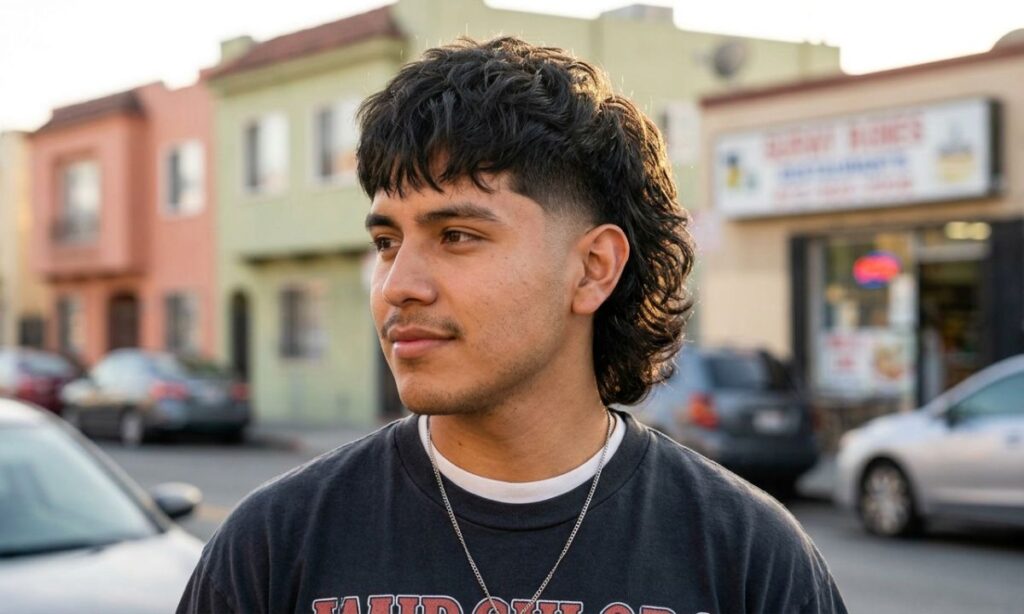
2. Burst Fade Mexican Mullet
The fade curves around the ear and drops behind it, leaving length in the back. This is the signature option for anyone who wants the mullet shape to stand out.

3. Textured Mexican Mullet
Choppy layers and point cutting give the top a lived-in, tousled feel. Use a matte paste to keep the texture visible all day.

4. Edgar Mexican Mullet
This version pairs a sharp fade with a blunt, heavy fringe and a straight-cut back. It is strongly tied to street style and looks best on thick, straight hair.

5. Low Taper Mexican Mullet
The taper starts low near the ear and neckline, so the sides stay fuller. It is softer than a skin fade and suits people who want a subtle edge.

6. Curly Mexican Mullet
Natural curls on top and in the back create volume and shape. A fade on the sides keeps the curls controlled. Moisture and curl cream are essential here.

7. Wavy Mexican Mullet
Waves add natural movement, so the cut looks relaxed without much effort. A sea salt spray enhances the pattern and adds grip.

8. Modern Disconnected Mexican Mullet
There is no gradual blend between the top and the back. Instead, a visible gap separates them, creating a bold, graphic silhouette. It takes confidence but delivers impact.

9. Crop Top Mexican Mullet
A short, textured crop on top meets a longer tail in the back. It is a good option if you want mullet character without long hair at the front.
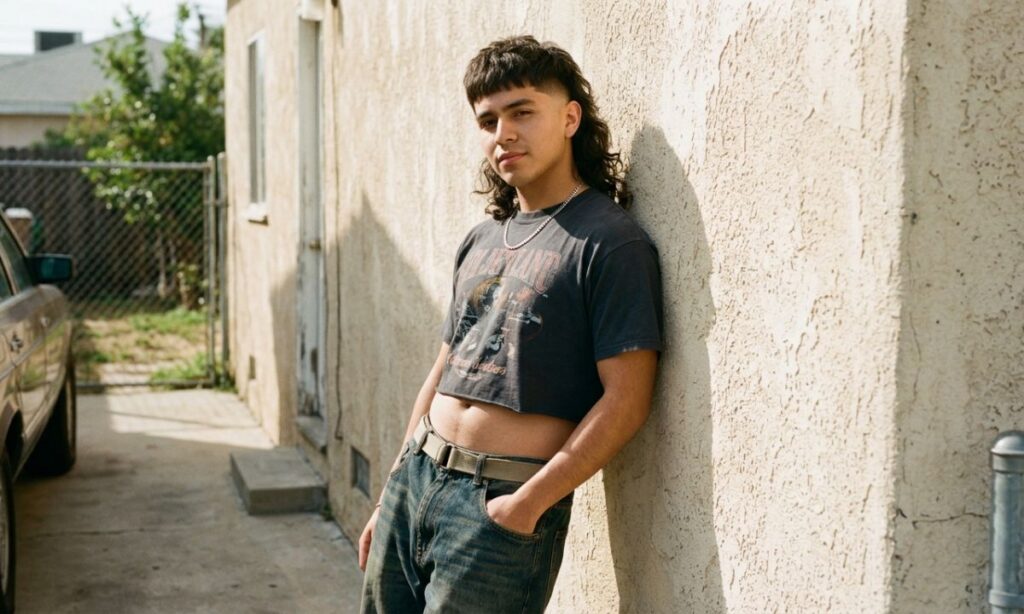
10. Slick Back Mexican Mullet
Hair on top is combed back and flows into the longer nape. Use pomade or gel for a polished, retro-inspired finish.

11. High Fade Mexican Mullet
The fade begins high on the sides, close to the temples. It creates strong contrast and makes the top look fuller. Expect more frequent touch-ups.

12. Skin Fade Mexican Mullet
The sides fade down to bare skin for maximum sharpness. It is the cleanest, most dramatic version and shows off precise barbering.

13. Braided or Tied-Back Mexican Mullet
The back section is braided or tied into a small tail. This works well for longer hair and keeps the style practical for sports or work.

14. Short Mexican Mullet
A compact version with limited length in the back. It is ideal if you want a subtle first step or have a conservative dress code.

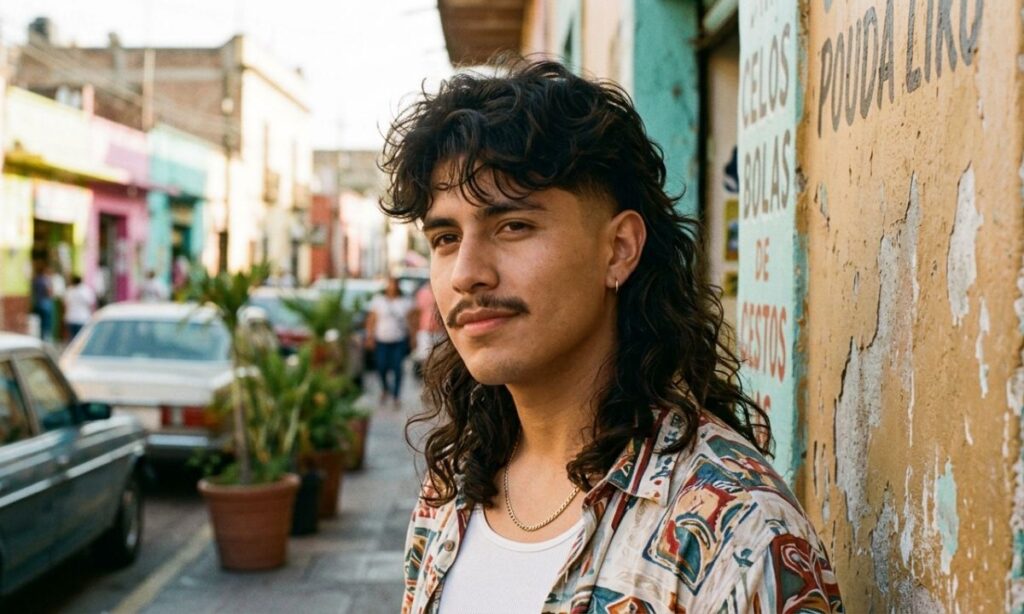
15. Long Flow Mexican Mullet
The back grows past the collar and moves freely. Pair it with a clean fade so the length looks intentional instead of unkempt.
Quick Comparison of Popular Styles
| Style | Boldness | Maintenance | Best For |
| Low Taper | Low | Low | First-timers, office settings |
| Taper Fade | Low–Medium | Medium | Everyday wear |
| Burst Fade | Medium | Medium | Defined mullet shape |
| Textured | Medium | Medium | Fine to medium hair |
| Curly / Wavy | Medium | Medium–High | Natural curls and waves |
| High Fade | High | High | Strong contrast lovers |
| Skin Fade | High | High | Sharp, polished looks |
| Disconnected | High | High | Bold personalities |
| Long Flow | Medium | Medium | Patient growers |
Choosing the Right Mexican Mullet for Your Face Shape
Face shape affects how balanced the cut looks. Use this as a guide, then let your barber adjust it.
Oval Face
Oval faces suit almost any version. A burst fade or textured mullet adds structure without overpowering your balanced features.
Round Face
Go for a high or mid fade with height on top. That creates vertical lines and makes the face look longer. Avoid very wide, flat styles.
Square Face
A low taper with soft texture balances a strong jawline. Slightly longer layers on top can soften sharp angles.
Diamond Face
Keep the sides fuller around the cheekbones with a low taper. A fringe or textured top helps balance a narrow forehead and chin.
Best Hair Types for a Mexican Mullet
Thick, straight hair:
holds shape well and suits Edgar and disconnected styles.
Wavy hair:
gains natural movement and needs little styling.
Curly hair:
creates volume and looks striking with a clean fade.
Fine hair:
works with layers and texture, but avoid cutting the back too long.
Coarse hair:
needs regular conditioning and a barber who can remove weight.
Very thin or receding hair can still work with a short version. Ask your barber to keep the top fuller and the fade subtle.
How to Style a Mexican Mullet Haircut
Wash and towel dry.
Leave hair slightly damp.
Apply a pre-styler.
Sea salt spray adds volume and grip.
Blow dry the top.
Lift the roots with a brush or your fingers.
Add product.
Work a pea-sized amount through the top and back.
Shape the back.
Smooth or scrunch it depending on your texture.
Finish with a light hold spray
if you need all-day control.
Maintenance Tips for Long-Lasting Results
- Sleep on a silk or satin pillowcase to reduce frizz.
- Avoid hot water on your hair when washing.
- Keep products light so the texture stays natural.
- Book your next appointment before you leave the chair.
Why Barbers Recommend the Mexican Mullet
Barbers like this haircut because it is flexible and shows their craft. It also gives clients an easy way to experiment with length without committing to a full mullet. If you change your mind, the sides stay neat while the back is trimmed off.
What to Say and What to Bring
Bring two or three clear photos that show front, side, and back views. Then explain the details.
Try saying: “I want a Mexican mullet with a low taper on the sides, textured length on top, and the back left long enough to cover my collar. Please blend it into the neckline.”
Mention the fade type (taper, burst, skin, or high), how much length you want to keep, and how you usually style your hair.
Best Products to Use
| Product | Best For | Finish |
| Matte clay or paste | Textured, messy looks | Natural, no shine |
| Pomade | Slick back styles | Shiny, strong hold |
| Sea salt spray | Wavy and fine hair | Beachy volume |
| Curl cream | Curly mullets | Defined, soft curls |
| Light hair oil | Long flow styles | Smooth ends |
How to Maintain a Mexican Mullet
Trim Schedule and Fade Touch-Ups
Fades grow out quickly, so plan ahead.
Skin and high fades:
every 2 weeks
Taper and low taper:
every 3 to 4 weeks
Top and back trims:
every 6 to 8 weeks
Neckline clean-up:
every 2 to 3 weeks
Washing and Conditioning Tips
Wash two to three times per week with a gentle shampoo. Overwashing dries out the longer sections. Use conditioner on the back and ends, and add a leave-in product if your hair is curly or coarse. Deep condition once a week if the length starts to feel dry.
7 Mexican Mullet Haircut Mistakes to Avoid
Choosing the wrong fade height.
A high fade on a round face or very low fade on a long face can look unbalanced.
Leaving the back too thick.
Heavy, unlayered length looks bulky. Ask for weight removal.
Skipping regular touch-ups.
A fade that grows out makes the whole cut look messy.
Using too much product.
Heavy gel or wax weighs hair down and kills texture.
Ignoring your hair type.
Fine hair needs different cutting than thick or curly hair.
Not bringing reference photos.
“Mullet” means different things to different people.
Neglecting hair health.
Dry, split ends in the back make the length look unkempt.
Is a Mexican Mullet Right for You?
It is a great fit if you want a bold, stylish cut and you are willing to visit the barber regularly. It also helps if you enjoy styling your hair and like experimenting.
It may not suit you if your workplace has strict grooming rules or you prefer a wash-and-go routine. In that case, try a short or low taper version first. You can always grow it out or cut it back.
Frequently Asked Questions
What is a Mexican mullet haircut?
It is a mullet with a faded or tapered side and longer, textured hair on top and in the back.
Is the Mexican mullet haircut still in style in 2026?
Yes. It remains popular thanks to its versatility, clean fades, and strong presence on social media.
How long does hair need to be for a Mexican mullet?
About 3 to 4 inches on top and 4 or more inches in the back is a good starting point.
What is the difference between a Mexican mullet and a regular mullet?
A Mexican mullet uses a sharp fade on the sides, while a regular mullet usually has longer, less defined sides.
Can I get a Mexican mullet with curly hair?
Yes. Curly hair adds volume and shape, and a fade keeps the sides tidy.
How often should I trim a Mexican mullet?
Touch up the fade every 2 to 4 weeks and trim the length every 6 to 8 weeks.
Which face shape suits a Mexican mullet best?
Oval faces suit it best, but a good barber can adapt the style to round, square, and diamond faces.
What products should I use?
Matte clay, sea salt spray, pomade, or curl cream, depending on your hair type and desired finish.
Final Thought
The Mexican mullet haircut combines classic attitude with modern styling techniques to create a bold and versatile hairstyle. Whether paired with a taper fade, burst fade, textured crop, or curly finish, this haircut offers endless opportunities for personalization. With the right styling and maintenance routine, a Mexican mullet can deliver a confident, fashionable appearance that stands out while remaining wearable in everyday life.

Owen Blake is a fashion writer and style enthusiast contributing to Faxhion Megazine. With a focus on fashion trends, personal style, seasonal looks, and practical styling ideas, Owen creates clear, reader friendly content. His work combines trend awareness, careful research, and an interest in helping readers make confident, informed fashion choices.