

Not sure which cut to ask your barber for? You’re not alone. Both styles look clean and sharp. They also look very close at first glance. The low taper fade vs mid taper fade choice comes down to one thing: where the fade starts. That small detail changes the whole look.
A low taper starts near the ears and neckline. It keeps more hair on the sides. The look is soft and neat. A mid taper starts higher, around the temple. It shows more contrast and feels bolder. This guide breaks down both cuts side by side. You will see who each one suits. You will also learn how to pick the right one for your hair, face, and style. By the end, you will know exactly what to tell your barber. Let’s get started. No guesswork needed.
⚡ Quick Answer: Low Taper Fade or Mid Taper Fade?
Choose a low taper fade if you want a soft, subtle, office-friendly cut. The fade stays low, around the ears and neckline.
Choose a mid taper fade if you want more contrast and a sharper shape. The fade starts higher, around the temples, and gives a bolder outline.
Here is the fast version:
- Low taper fade: subtle, classic, easy to grow out
- Mid taper fade: balanced, modern, more noticeable
- Not sure? Start with a low taper. You can always go higher next visit.
✂️ Taper Fade Basics: How It Differs From a Regular Fade
Before comparing the two, you need to know what a taper fade actually is. Many people mix it up with a standard fade.
What Is a Taper Fade Haircut?
A taper fade gradually shortens the hair on the sides and back. It usually focuses on the sideburns, the area around the ears and the nape. The hair on the sides stays natural and neat, and the fade only shows at the edges.
Think of it as a gentle slope. The hair gets shorter step by step as it moves down toward the hairline.
The Short Version
A regular fade cuts the hair very short, often down to the skin, and climbs much higher on the head. A taper fade is softer and leaves more length. Here is how they differ:
| Feature | Taper Fade | Regular Fade |
| Blend area | Mostly edges and neckline | Large area of the sides and back |
| Length at the bottom | Short, but rarely bald | Often skin-short |
| Look | Soft and natural | Sharp and dramatic |
| Grow-out | Slow and tidy | Faster and more obvious |
If you like a classic, polished cut that does not scream “fresh from the barber,” the taper is your friend.
📏 What Is a Low Taper Fade?
A low taper fade starts just above the ear and curves down toward the nape. It follows your natural hairline. Most of the hair on the sides stays untouched, so the change is gentle.
Key features of a low taper fade:
- Fade begins near the ear and sideburn
- Very little contrast between the sides and the top
- Keeps a natural, tidy outline
- Works with short, medium and long hair on top
This cut is popular because it looks neat without trying too hard. It suits students, office workers and anyone who wants a clean haircut that does not draw attention. It also works well if you are new to fades and want to test the waters.
📐 What Is a Mid Taper Fade?

A mid taper fade starts higher, usually around the temple or the middle of the sides. The hair drops from your top length to a much shorter length around the ears and neck.
Key features of a mid taper fade:
- Fade begins at the temple level
- Clear contrast between the top and the sides
- Makes the top look fuller
- Gives the head a sharper, more defined shape
It sits right between the subtle low taper and the bold high taper. For many guys, that makes it the “just right” option. You get a visible fade, but it still looks refined.
📊 Low Taper Fade vs Mid Taper Fade: Side-by-Side Comparison
This table covers the main differences in one place.
| Feature | Low Taper Fade | Mid Taper Fade |
| Fade starting point | Above the ear, near the neckline | Around the temple, mid-side |
| Contrast level | Low and soft | Medium and clear |
| Overall look | Classic, clean, subtle | Modern, sharp, balanced |
| Best for | Work, school, formal settings | Casual, trendy, mixed settings |
| Grow-out | Very gradual | Noticeable after 2–3 weeks |
| Maintenance | Lower | Moderate |
| Beginner friendly | Yes | Yes, with a good barber |
| Works with a beard | Yes, blends easily | Yes, creates a strong frame |
In short: the low taper is quiet confidence. The mid taper is clean confidence with a bit more attitude.
👔 Which One Looks More Professional?
Both can look professional, but they send slightly different signals.
The low taper fade is the safer pick for strict workplaces. It looks natural, even when your hair grows out. Think banking, law, teaching, healthcare and client-facing jobs.
The mid taper fade works in most modern offices too. It looks sharp and intentional. In creative fields, startups and sales roles, it can come across as polished and current.
A good rule of thumb:
- Conservative dress code? Go low.
- Business casual or creative workplace? Go mid.
- Interviews? Either works if the top is neatly styled and the edges are clean.
The haircut matters less than how well it is kept. A fresh mid taper beats a three-week-old low taper every time.
👤 Which Fade Suits Your Face Shape?
Fade height changes how your face looks. A higher fade adds contrast and makes the top look bigger. A lower fade keeps things softer.
| Face Shape | Better Choice | Why |
| Oval | Either | Most cuts suit this shape |
| Round | Mid taper | Adds height and slims the sides |
| Square | Low taper | Softens strong angles |
| Oblong or long | Low taper | Avoids making the face look longer |
| Heart | Low taper | Keeps balance at the jawline |
| Diamond | Mid taper | Adds structure around the cheekbones |
These are guidelines, not strict rules. Your hairline, ear size and head shape also matter. A skilled barber can adjust the fade height by a small amount to flatter your features.
Quick tip:
If you have a round face, ask for a bit of volume on top. It adds length and balances the sides.
💇 Which Fade Works Better for Your Hair Type?

Both fades work across hair types, but texture changes the final look.
Straight Hair
Straight hair shows every line, so clean blending is important. A low taper looks neat and natural. A mid taper gives a sharp, crisp finish, but it needs regular upkeep because the fade lines show clearly.
Wavy Hair
Wavy hair has natural movement, which hides small flaws. Both fades work well. A mid taper helps control volume on the sides and keeps waves tidy on top.
Curly Hair
Curls need space to shine. A low taper keeps the sides tight at the edges while leaving the curls full. A mid taper creates strong contrast between tight sides and bouncy curls, which looks stylish and bold.
Coily and Textured Hair
Both cuts are popular here. A mid taper gives a defined shape-up and strong contrast. A low taper keeps things soft and refined. Ask your barber to blend carefully around the temples and nape.
Thin or Receding Hair
A low taper is often the safer choice. It keeps the sides fuller and does not draw attention to a thinning crown. A very high contrast can make thinning hair more noticeable.
🔥 Best Top Styles to Pair With Each Fade
The top of your haircut decides the vibe. Here are strong combinations for each fade.
Best Styles With a Low Taper Fade
- Side part: timeless and office-ready
- Textured crop: easy to style and low effort
- Classic quiff: adds a little height without being loud
- Slick back: clean and formal
- Curly top: natural curls with neat edges
Best Styles With a Mid Taper Fade
- Pompadour: the fade frames the volume well
- French crop: short, sharp and modern
- Messy textured top: casual contrast with tidy sides
- Spiky top: gives a youthful, edgy look
- Longer flow: the fade keeps long hair looking controlled
Style tip: the more volume you want on top, the better a mid taper works. It makes the top stand out against the shorter sides.
🛠️ Maintenance: Which Taper Fade Lasts Longer?
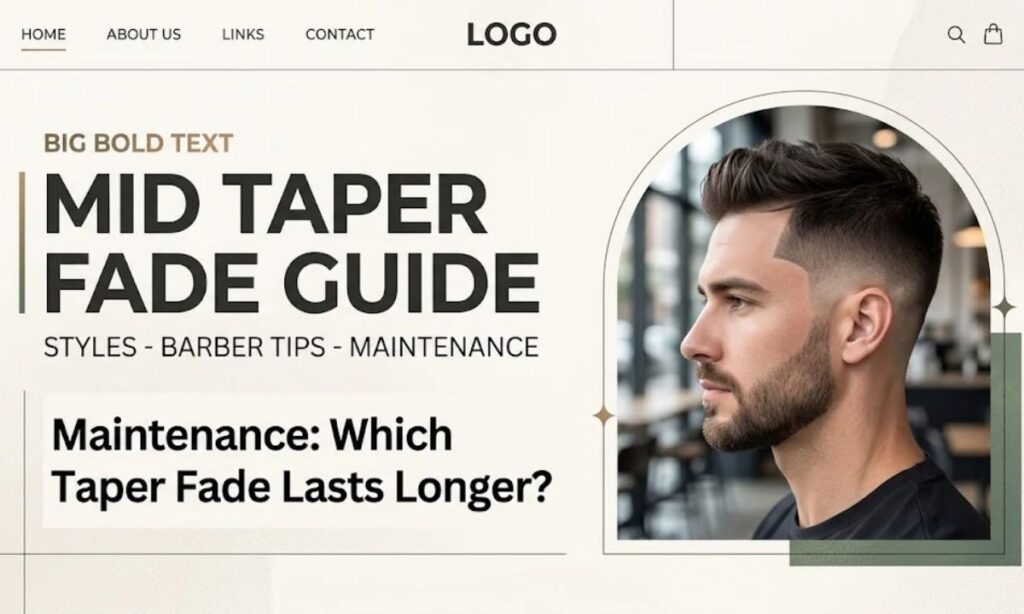
The low taper fade lasts longer. Because the fade is subtle and sits low, the grow-out is soft. You can stretch a low taper to four or five weeks and still look put together.
The mid taper fade shows growth faster. The contrast is higher, so you notice when the sides start to fill in. Most people want a refresh after two to three weeks.
How Often Should You Get a Taper Fade?
| Cut | Ideal Visit Frequency | Can You Stretch It? |
| Low taper fade | Every 3–4 weeks | Up to 5 weeks |
| Mid taper fade | Every 2–3 weeks | Up to 4 weeks |
If your hair grows fast or you have a beard, plan on the shorter end of each range. If you keep your neckline clean at home, you can stretch visits a little. Always let your barber know your schedule so they can plan the length for you.
Everyday Styling and Products
Taper fades are easy to style at home. You mainly work on the top. Keep your routine simple:
- Wash with a gentle shampoo.
- Towel dry until the hair is damp, not wet.
- Apply a small amount of product.
- Shape with your fingers or a comb.
- Finish with a light hold spray if needed.
Best products by finish:
- Matte clay or paste: textured, natural look
- Pomade: shine and strong hold for slick or classic styles
- Sea salt spray: beachy volume and texture
- Curl cream: defined curls without frizz
- Light oil: moisture for dry or coily hair
Use a pea-sized amount to start. Too much product weighs hair down and hides the clean contrast that makes a taper look good.
💈 How to Ask Your Barber for the Right Taper Fade
Clear communication gets better results. Barbers use different terms, so be specific.
Follow these steps:
- Bring a photo. A picture removes guesswork.
- Name the fade height. Say “low taper fade” or “mid taper fade.”
- Describe the length on top. Say “short,” “medium” or “leave it long.”
- Say how the sides should end. Ask whether you want a skin-short finish or some length left at the bottom.
- Mention the neckline. Say “tapered,” “rounded” or “squared.”
- Talk about your beard. If you have one, ask the barber to blend it into the fade.
Example script:
“I’d like a mid taper fade with the sides blended into my sideburns. Keep about three inches on top and leave the neckline natural.”
If you are unsure, ask for a lower fade first. It is easier to make a cut shorter or higher later than to fix one that is too aggressive.
⚖️ Pros and Cons of Low Taper Fade vs Mid Taper Fade
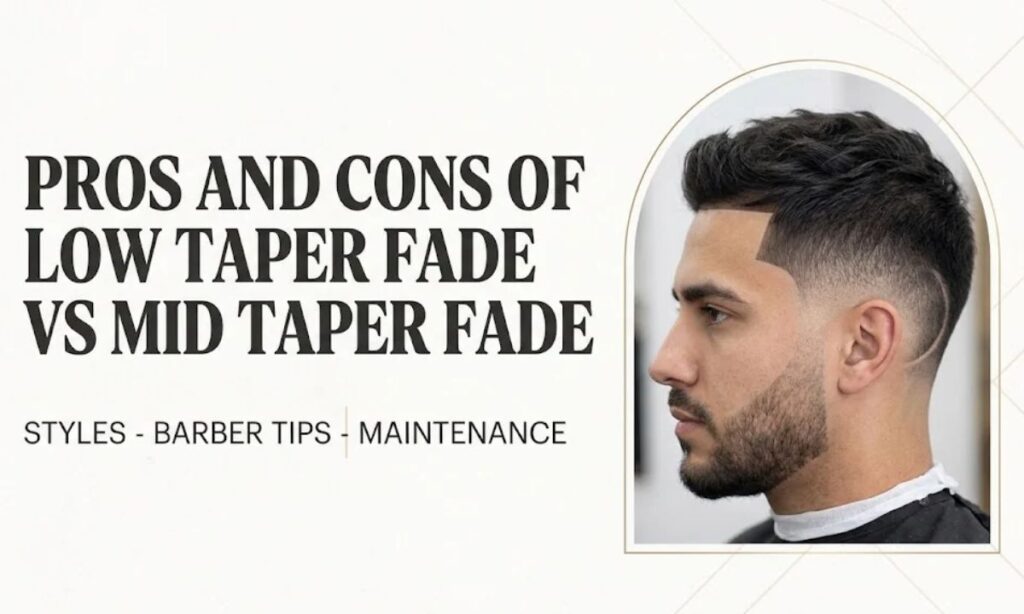
Low Taper Fade
Pros:
- Subtle and professional
- Grows out gracefully
- Suits most face shapes
- Great for first-timers
Cons:
- Less contrast, so less dramatic
- Does little to add height on top
- May look plain to people who want a bold style
Mid Taper Fade
Pros:
- Strong shape and clean lines
- Makes the top look fuller
- Looks modern and stylish
- Works well with beards
Cons:
- Needs more frequent trims
- Grow-out is more visible
- Can look too sharp for very strict dress codes
❌ Common Mistakes to Avoid
Even a great haircut can go wrong. Watch out for these errors:
- Going too high too fast. If you have never had a fade, start low.
- Ignoring your head shape. Bumps and flat spots change how a fade looks.
- Skipping the reference photo. Words get lost in translation.
- Using too much product. Heavy styling hides the blend.
- Waiting too long between cuts. A taper looks best when fresh.
- Forgetting the neckline. A messy back ruins a good fade.
- Not talking about the beard. If you have facial hair, the fade should connect to it.
- Choosing by trend alone. Pick the cut that fits your hair, face and lifestyle.
❓ Frequently Asked Questions
What is the main difference between a low taper fade and a mid taper fade?
The fade height. A low taper starts near the ear and neckline, while a mid taper starts around the temple.
Which is better, a low taper fade or a mid taper fade?
Neither is better in every case. Low suits a subtle, formal look, and mid suits a sharper, more modern one.
Is a low taper fade more professional?
Usually yes, because it is softer and grows out neatly. A well-kept mid taper still looks professional in most offices.
Which taper fade is easier to maintain?
The low taper. It shows less contrast as it grows out, so you can go longer between visits.
How often should I get a mid taper fade?
Every two to three weeks keeps it looking sharp.
Can I get a taper fade with curly hair?
Yes. Both fades work well with curls, and they keep the sides tidy while the top stays full.
Does a taper fade work with a beard?
Yes. Ask your barber to blend the beard into the fade for a smooth, connected look.
Is a taper fade the same as a regular fade?
No. A taper fade is softer and mostly affects the edges, while a regular fade is shorter and climbs higher.
Which fade suits a round face?
A mid taper often works best, since it adds height and slims the sides.
Is a low taper fade good for thinning hair?
Often yes. It keeps more hair on the sides and avoids harsh contrast.
✅ Final Thought
Now you know the Low Taper Fade vs Mid Taper Fade: Key Differences (2026). Both cuts look clean and modern. The low taper sits near the ear. It looks soft and neat. It grows out slowly. Low suits strict dress codes best.
The mid taper starts at the temple. It gives more contrast and a sharper shape. It needs a trim every two to three weeks.Pick the cut that fits your life. Want a calm, work-ready look? Go low. Want a bold, modern edge? Go mid. Think about your face shape and hair type too.
Bring a photo to your barber. Tell them the fade height clearly. Keep your neckline clean. Small details make a big difference. Not sure yet? Start low and move up next time. Either way, you will leave the chair looking sharp and feeling confident.

Owen Blake is a fashion writer and style enthusiast contributing to Faxhion Megazine. With a focus on fashion trends, personal style, seasonal looks, and practical styling ideas, Owen creates clear, reader friendly content. His work combines trend awareness, careful research, and an interest in helping readers make confident, informed fashion choices.