
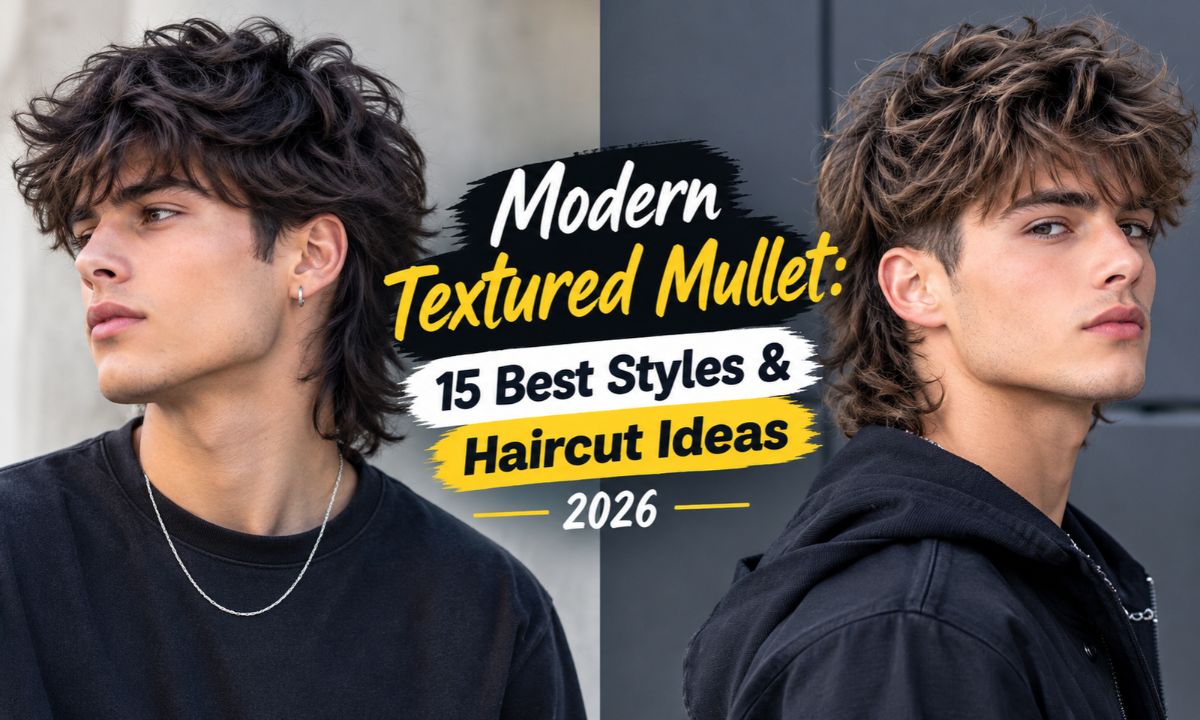
The mullet is back, and it looks better than ever. Gone are the harsh lines of the old days. Today’s version is softer, lighter, and easier to wear. A modern textured mullet gives you short sides and a longer back. The top has choppy layers that add movement. It looks cool, but not extreme.
This style works on straight, wavy, and curly hair. It suits most face shapes too. You can keep it neat for the office. Or you can go bold for a night out. The cut is easy to style.
A little sea salt spray or texture paste does the job. In this guide, you will find 15 of the best styles for 2026. Each one comes with simple tips. You can show them to your barber. Pick the one that fits your hair type and daily routine.
What is a textured mullet haircut?
A textured mullet is a layered haircut with shorter hair on the top and sides and longer hair at the back. Barbers add texture with point cutting, razoring or choppy layers. The result looks lived-in and movable, not stiff or boxy.
How is it different from a classic mullet?
The classic 80s mullet was an extreme, blunt shape. The modern version is blended, layered and tailored to your head shape.
| Feature | Classic Mullet | Modern Textured Mullet |
| Sides | Short, often untouched | Tapered or faded smoothly |
| Back length | Very long, blunt | Shorter, layered, often neck-length to shoulder-length |
| Shape | Sharp split between front and back | Blended, flowing transition |
| Texture | Flat or feathered | Choppy, piecey, layered |
| Styling | Brushed and sprayed | Clay, paste or sea salt spray |
| Overall vibe | Retro novelty | Fashion-forward and wearable |
Key Features of a Modern Textured Mullet (Explained)
Almost every version of this cut shares five traits. Knowing them helps you explain what you want.
Natural Texture
Texture is the heart of the cut. Your barber removes weight with point cutting or a razor so the hair separates and moves. Wavy and curly hair does much of this work on its own.
Layered Volume
Layers add shape on top and movement at the back. They also stop thick hair from sitting heavy. Fine hair gains body, and thick hair loses bulk.
Clean Fades
Many modern mullets pair longer hair with tapered or faded sides. The contrast makes the length look intentional and keeps the cut neat around the ears.
Versatile Length
You can go short and subtle or long and bold. A mini version barely touches the collar. A long version can reach the shoulders.
Easy Styling
Most styles need only a few minutes and one or two products. The look should feel effortless, not overworked.
How to Choose the Right Textured Mullet
The best mullet is the one that suits your face and your hair. Start with these two checks.
Best Mullet Cuts for Your Face Shape
| Face Shape | What Works Best | Why |
| Oval | Almost any style | Balanced proportions suit most cuts |
| Round | Taller crown, higher fade, longer back | Adds height and length |
| Square | Softer layers, textured fringe | Softens a strong jaw |
| Long / Oblong | Lower fade, fuller sides, fringe | Avoids adding extra height |
| Heart | Side-swept fringe, fuller back | Balances a wider forehead |
Best Mullet Cuts for Your Hair Type (Straight, Wavy, Curly)
- Straight hair: Ask for choppy layers and add texture with sea salt spray or powder.
- Without styling, straight hair can look flat.
- Wavy hair: This is the easiest type. Waves give natural volume and movement, so a low taper and light layers are enough.
- Curly hair: Keep the top a little longer so curls don’t puff up. Leave extra length at the back, since curls spring up after cutting.
- Thick hair: Ask for internal layering so the back doesn’t feel bulky.
- Fine or thinning hair: A fringe pushed forward and a shorter, neater back make hair look fuller.
15 Modern Textured Mullet Styles
Save a photo of your favourite and show it to your barber. Each idea below includes a quick tip.
Classic Textured Mullet
This is the base style every other cut builds on. The sides stay short and the back grows longer. The top gets light layers for texture. It looks balanced and easy to wear. Ask your barber to blend the length, so it does not look too sharp. Style it with a bit of paste and finger-comb it into place. It works well for guys who want a safe first step into the mullet world.

Taper Fade Textured Mullet
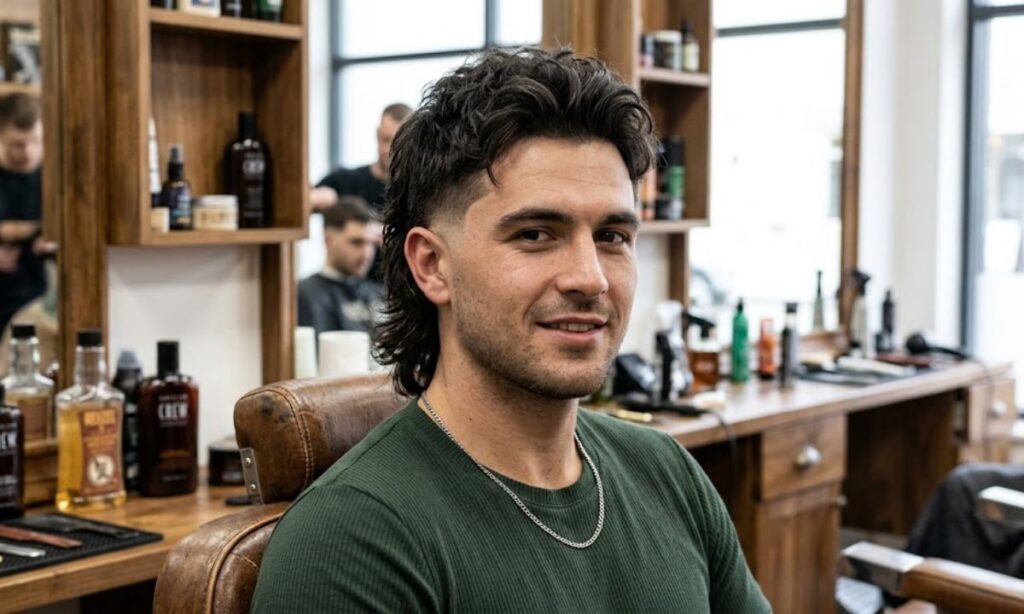
The sides fade slowly from short to very short near the neckline. This keeps the cut clean and neat. The longer back and top still bring plenty of texture. It looks sharp at work and cool on weekends. Touch up the fade every three to four weeks. Use a light cream to keep the top soft. This style suits men who like a tidy edge with a bit of attitude.
Burst Fade Textured Mullet
A burst fade curves around the ear, like a half circle. The hair stays longer at the back. That creates a strong shape and a bold look. The top can be messy or smooth. Both work well. This cut draws eyes to the back of your head. So pick a good barber who can blend it well. Use a matte clay to show off the layers.

Low Fade Textured Mullet
The fade starts low, just above the ear and neckline. It leaves more hair on the sides than other fades. That makes it softer and easier to grow out. The top has choppy layers for movement. It is a good pick for first-timers. It also suits office life. Use sea salt spray for a relaxed finish. Visit your barber every four to five weeks.

High Fade Textured Mullet
Here, the fade starts high on the head. The sides look very short and crisp. The longer top and back stand out even more. The contrast is strong and modern. This cut needs more upkeep. Expect a trim every two to three weeks. It looks great with thick hair. Use a strong paste to hold the shape all day.

Messy Textured Mullet
This one is all about a rough, lived-in look. The layers are uneven on purpose. The ends are choppy and loose. You do not need to style it much. Just add texture spray and tousle it with your hands. It looks great on thick or slightly wavy hair. It is a good fit for casual, laid-back guys. Skip heavy gel, since it ruins the effect.

Curly Textured Mullet
Curls make a mullet look full and fun. The longer back forms soft, bouncy curls. The top keeps its natural shape. Your barber should cut the hair dry to see how the curls fall. Use a curl cream to fight frizz. Avoid brushing when dry. A diffuser can help add volume. This style shows off your natural texture without much effort.

Wavy Textured Mullet
Waves give the mullet an easy, beachy feel. The layers flow naturally and look soft. You do not need much product. A light mousse or sea salt spray is enough. Let your hair air-dry for the best result. The back can be a little longer to show the wave pattern. It looks good on most face shapes. It also grows out nicely between cuts.

Undercut Textured Mullet
The sides and lower back are cut very short, sometimes even shaved. The top stays long and heavy. This creates a sharp line between the two lengths. The look is bold and modern. Style the top up, back, or to the side. Use a firm clay for hold. Keep the shaved areas fresh, or the shape will fade. It suits guys who want a strong statement.

Shaggy Textured Mullet
This cut is full of layers from top to bottom. The hair looks soft, loose, and a bit wild. It has a retro rock feel. The sides are not cut too short. The back flows over the neck. Thick or wavy hair works best here. Use a light texture spray, and let it dry naturally. It needs fewer trims, so it is easy to maintain.

Disconnected Textured Mullet
There is no smooth blend between the top and the back. The lengths are separate on purpose. This gives a dramatic, edgy look. The top is short or medium, and the back drops longer. It takes a skilled barber to get it right. Bring photos to your appointment. Style it with a little wax for shape. It is great for people who like to stand out.

Mini Textured Mullet
Not ready for long hair? This version is a gentle option. The back is only slightly longer than the sides. The top has short, choppy layers. It looks subtle and clean. Most people will see it as a stylish crop. It is great for school, work, or formal events. Use a small amount of paste to add texture. You can grow it longer later if you like it.

Long Textured Mullet
This style keeps lots of length at the back. It can reach the shoulders. The top and sides stay shorter and layered. The look is bold and a bit rock and roll. Healthy hair is key here. Use a good shampoo and conditioner. Trim the ends every two months to avoid damage. Style with a light oil or cream to keep the length smooth and shiny.

Textured Mullet with Fringe
A short fringe adds a fresh twist to this cut. It frames the face and softens the forehead. The sides stay short, and the back stays long. The fringe can be straight, swept, or choppy. Pick the one that suits your face shape. Use a light paste to keep it in place. This style looks youthful and trendy. It also helps hide a high forehead.

Mohawk Textured Mullet
This cut mixes a mohawk with a mullet. The center strip of hair is longer and styled up. The sides are short or faded. The back flows down into a mullet tail. It is loud, fun, and full of energy. You will need strong clay or wax for hold. Style the top upward with your fingers. It is best for confident guys who love bold hair.

How to Style a Modern Textured Mullet
Start with damp hair after a wash. Apply a small amount of sea salt spray and blow-dry it on low heat. Take a pea-sized amount of matte paste or clay, rub it in your palms, and work it through the top and back. Use your fingers to shape the layers and add messy texture. Finish with a light hairspray for hold, and avoid heavy gel since it weighs the hair down.
Best Products for Texture and Hold (Sea Salt Spray, Clay, Paste)
| Product | Best For | Finish |
| Sea salt spray | Straight and fine hair | Matte, beachy, light hold |
| Matte clay | Thick hair, strong shape | Dry, textured, firm hold |
| Texture paste | Messy and shaggy looks | Flexible, piecey |
| Curl cream | Curly and wavy hair | Soft definition, no crunch |
| Texture powder | Fine hair, root lift | Light volume at the roots |
Quick Daily Styling Routine
- Wash with a gentle shampoo. Condition the length.
- Towel-dry until damp, not dripping.
- Spray sea salt or apply curl cream through the top and back.
- Blow-dry on medium heat, lifting the roots with your fingers. Curly hair can be diffused or air-dried.
- Rub a small amount of clay or paste between your palms.
- Work it through the top and ends, then pinch and twist for texture.
The whole routine takes about five to ten minutes. Use less product than you think you need.
Maintenance Tips
A mullet looks best when the shape stays defined. These habits help.
- Trim often. Faded and undercut versions look best with a trim every 3 to 4 weeks. Softer, longer cuts can last 5 to 6 weeks.
- Protect the back. Longer hair ends up dry. Use conditioner and a leave-in product.
- Limit heat. Heavy blow-drying flattens texture and damages ends.
- Wash smartly. Washing every day strips natural oils. Two to four times a week is enough for most people.
- Grow it gradually. Hair grows roughly half an inch a month, so a full mullet takes months. Ask for tidy-up trims while you wait.
How to Ask Your Barber for a Textured Mullet
“Mullet” alone can lead to the wrong cut. Be specific about three areas: the sides, the top and the back.
- Sides: Say “taper” or “fade” and name the height (low, mid or high).
- Top: Ask for choppy layers, and a fringe if you want one.
- Back: Give the length, such as neck-length, collar or shoulder, and ask for layers, not a blunt line.
- Blend: Ask for a soft transition rather than a hard disconnect, unless you want that look.
Bring two or three photos from different angles. Photos remove guesswork.
How long should hair be for a textured mullet?
You need about 3 to 4 inches (8 to 10 cm) on top and at least 3 inches at the back for a basic cut. Longer styles need 6 inches or more at the back.
Common Mistakes to Avoid
- Skipping the photo. Words alone can be misread.
- Choosing the wrong back length. Too long can look dated. Too short loses the mullet shape.
- Ignoring face shape. A high fade on a long face stretches it even more.
- Using heavy products. Thick gels flatten the layers and kill movement.
- Skipping trims. An overgrown mullet loses its outline fast.
- Fighting your texture. Curls and waves are an advantage here, so work with them.
- Going to a barber who has never cut one. Check their portfolio first.
Is the Textured Mullet Still in Style?
Yes. The modern textured mullet remains a popular choice in 2026 because it has shifted from shocking to refined. Softer, shorter and fade-friendly versions fit everyday life, which is why barbers keep recommending it.
Frequently Asked Questions
What is a modern textured mullet?
It’s a layered haircut with short, tapered sides and top plus a longer, textured back. It looks softer and more blended than the classic 80s mullet.
Is a textured mullet suitable for straight hair?
Yes. Ask for choppy layers and use sea salt spray or powder to add volume and movement.
How often should I get my textured mullet trimmed?
Every 3 to 6 weeks, depending on the style. Fades and undercuts need the shorter schedule.
Can I wear a mullet to work?
Yes, especially a mini or low-taper version. A shorter back and neat styling keeps it professional.
Does a textured mullet work for curly hair?
Very well. Curls add natural volume. Keep the top slightly longer and use curl cream for definition.
Can a mullet hide a receding hairline?
It can help. A textured fringe pushed forward and a neat, shorter back make the hairline less noticeable.
Final Thought
The modern textured mullet works because it’s flexible. You can keep it short and neat, go long and shaggy, or pair it with a sharp fade. The key is matching the cut to your face shape and hair type, then styling it with a light hand.
Pick one of the 15 ideas above, save a few reference photos, and book a barber who understands layering. With regular trims and the right products, your mullet will look intentional every day.

Owen Blake is a fashion writer and style enthusiast contributing to Faxhion Megazine. With a focus on fashion trends, personal style, seasonal looks, and practical styling ideas, Owen creates clear, reader friendly content. His work combines trend awareness, careful research, and an interest in helping readers make confident, informed fashion choices.